Growing lush, healthy aquatic plants relies on reliable carbon delivery. This guide highlights five bio-friendly CO2 systems and monitors designed for freshwater tanks, from beginner setups to compact desktop rigs. Each option supports steady CO2 levels, helping rapid growth, vibrant plant color, and stable aquarium health. Below you’ll find concise overviews, follow-up buying considerations, and a practical buying guide to compare features such as regulation, monitoring, and ease of use.
| Product | Brand | Key Feature | Buy Link | Image |
|---|---|---|---|---|
| Aquario Neo CO2 | Aquario | DIY kit, slow release | Link |  |
| Hygger CO2 Nano Drop Checker | Hygger CO2 | Glass monitor with color change | Link |  |
| FZONE Desktop CO2 System | FZONE | Compact regulator, 45g cartridge | Link |  |
| Pawfly CO2 Drop Checker Kit | Pawfly | Complete monitoring kit with solution | Link |  |
| Upgraded Hygger CO2 Generator System | Hygger CO2 | Motor valve with timer, 2L/5L model | Link | 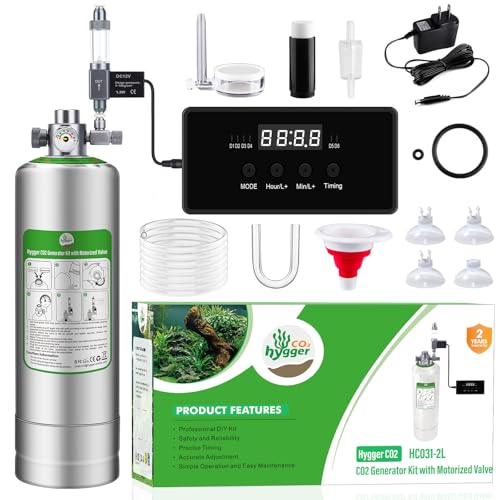 |
Choosing the right CO2 system involves balancing tank size, ease of use, and monitoring needs. The following sections provide in-depth looks at five options, starting with compact and beginner-friendly setups and progressing to more feature-rich systems for enthusiasts seeking precise control and hands-off operation.
Aquario Neo CO2 Kit
The Aquario Neo CO2 kit is a DIY-style option designed for freshwater aquariums, terrariums, and paludariums. It emphasizes a slow-release approach to CO2 delivery, which can help create a stable carbon source for delicate plant species. The kit’s primary appeal lies in its simple setup and cost-effective materials, making it accessible to hobbyists who prefer customizing their dosing strategy. Users should allow the full 24-hour activation period as recommended—skipping this step can lead to inconsistent CO2 release and potential plant stress. Regular monitoring remains important to avoid oxygen fluctuations and ensure plant uptake aligns with tank bioload.
Key considerations: compatibility with smaller tanks, DIY customization potential, and the importance of waiting the full activation period. This option suits beginners who want a budget-friendly entry into CO2-enhanced planted tanks and are comfortable adjusting flow and injection timing over time.
- Target audience: beginner to intermediate hobbyists
- Pros: budget-friendly, flexible DIY approach
- Cons: longer setup curve, less integrated monitoring
Hygger CO2 Nano Drop Checker
The Hygger CO2 Nano Drop Checker provides continuous visual feedback on CO2 levels via a color-change indicator. Its curved glass design holds a pH indicator solution that shifts color in response to dissolved CO2, enabling quick, at-a-glance adjustments without electronic readouts. The unit includes a suction cup mount for flexible placement, ensuring the monitor remains visible from multiple viewing angles. While the drop checker offers reliable qualitative readings, it is best used in conjunction with a stable CO2 injection system to prevent mismatches between perceived and actual concentrations.
Considerations include the importance of calibration with the included solution and the benefit of proactive placement for optimal visibility. This monitor is ideal for planted tanks where simple, ongoing CO2 awareness is preferred over strict quantitative control.
- Pros: real-time visual cues, easy installation
- Cons: qualitative only; needs periodic solution replacement
FZONE Desktop CO2 System
The FZONE desktop CO2 system targets compact spaces with a slim profile, making it suitable for nano tanks or desktop setups. It ships with a 45g CO2 cartridge and supports 5/8″ and 3/8″ threaded interfaces, minimizing the need for extra adapters. A notable advantage is the compact footprint and the potential for extended operation due to higher-density liquid CO2. The kit emphasizes a quick-release structure for straightforward installation and maintenance, reducing downtime during tank maintenance or cartridge replacement. Prospective buyers should note the need to soak the diffuser 24 hours before use to optimize initial bubble production.
Buying considerations include cartridge availability, ease of upgrade, and compatibility with existing tank hardware. This option is well-suited to small to medium tanks where space-saving design and simple operation are valued.
- Pros: compact footprint, easy to install
- Cons: may require regular cartridge changes for steady dosing
Pawfly CO2 Drop Checker Kit
The Pawfly Glass CO2 Drop Checker Kit provides a comprehensive monitoring setup with curved glass tubing, reagent solution, and two suction cups. It is designed for easy at-home CO2 tracking, offering clear, color-based indicators of CO2 balance. Setup is straightforward: add 20 drops of reagent, mount on the tank wall, and observe changes after a couple of hours. Color interpretations—Green for balanced, Yellow for excessive CO2, Blue for insufficient CO2—assist novice aquarists in making quick adjustments. The kit’s all-in-one packaging reduces the need to source separate components.
Key considerations include the time-to-read and the dependency on accurate solution preparation. This option appeals to hobbyists who want an all-in-one monitoring solution without buying multiple individual parts.
- Pros: complete kit, easy interpretation
- Cons: requires correct reagent handling and periodic replenishment
Upgraded Hygger CO2 Generator System
The Upgraded Hygger CO2 Generator System emphasizes motor valve technology for precise timing of CO2 injections. The design aims to deliver consistent dosing through programmable timing, which can be a significant advantage for maintaining stable carbon levels in larger or more demanding planted tanks. The quick-release structure simplifies installation and maintenance, reducing setup time and inconvenience during cartridge changes or system adjustments. Buyers should be aware of some normal operational sounds from valve actuation and the need to soak diffusers before deployment to ensure immediate CO2 release.
Key buying points include timer accuracy, system reliability, and ease of integration with tank hardware. This option is best for hobbyists seeking a semi-automated, scalable solution that can grow with a larger or more diverse plant collection.
- Pros: precise timing, scalable for larger tanks
- Cons: slightly higher complexity, ongoing upkeep
Buying Guide: Key Purchase Considerations
CO2 systems for planted aquariums vary in complexity, price, and maintenance. Consider the following factors to pick a setup that matches your tank size, plant density, and experience level:
-
<liTank size and plant load
- Control method: DIY, regulator-based, or fully automated
- Monitoring approach: qualitative color indicators vs. quantitative pH/CO2 meters
- Space and compatibility: desktop vs. canister-style systems, threaded interfaces
- Maintenance frequency: cartridge changes, solution replacements, diffuser cleaning
- Safety and ease of use: venting, leak prevention, timer reliability
Comparative Quick Take
- Best for budget entry: Aquario Neo CO2 Kit
- Best visual monitoring: Hygger Nano Drop Checker
- Best for small desktops: FZONE Desktop CO2 System
- Best all-in-one kit: Pawfly Drop Checker Kit
- Best for automation and precision: Upgraded Hygger CO2 Generator System
In summary, each option provides a path to healthier, faster-growing aquatic plants through improved carbon availability. Balance your tank size, maintenance capacity, and desired level of control when choosing a system. The listed products offer a range of entry points—from simple, budget-friendly kits to more advanced, timer-driven solutions—so you can find a CO2 setup that aligns with your planted tank goals.