Choosing the right checkbook register can streamline personal finance, small business bookkeeping, and home budgeting. This guide highlights five top options that pair well with printed folder systems, offering clear lines, durable formats, and practical features. Use the summary table below to compare key points at a glance.
| Product | Brand | Key Benefit |
|---|---|---|
| 12 Magnolia Registers, 26-27-28 Calendars | MAGNOLIA REGISTERS | Back calendars for planning and quick reference |
| The Superior Register’s Premium Check Book Register & Debit Card Ledger Notebook | The Superior Register | Enhanced standard edition with extra transaction lines |
| Larger Lines Checkbook Registers | Easy Read Register | Wider line spaces for easy reading |
| Check Desk Registers (Executive Deskbook) | MAGNOLIA REGISTERS | Large format with ample entry capacity |
| Savings Transaction Record Register | MAGNOLIA REGISTERS | Dedicated savings transaction tracking |
12 Magnolia Registers For Back Calendar Layouts
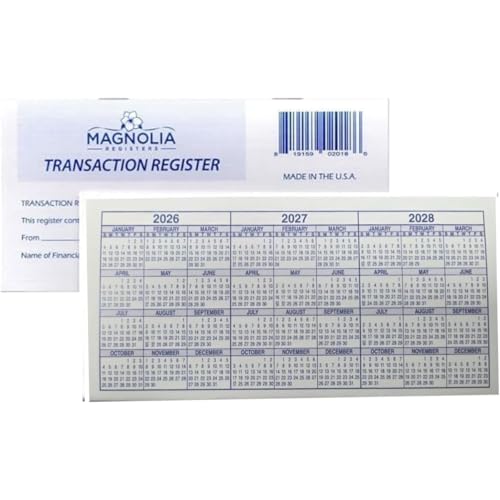
These registers combine 12 checkbook transaction entries with a 26-27-28 calendar grid on the back, offering a compact yet capable ledger. Made in the USA, the design emphasizes clarity and dependable paper quality. The dual calendar and transaction formats support routine month-end reconciliations and budgeting notes, helping users maintain accurate balances without flipping through multiple ledgers. The product is well-suited for households that prefer a simple, integrated ledger system. The durable binding aids long-term use in a desk or file cabinet. Ideal for users who want a straightforward, all-in-one reference.
The Superior Register Premium Check Book Register

The Superior Register presents a comprehensive transaction ledger with a clear, user-friendly layout designed for personal and small-business use. The Premium/Standard Edition expands entry lines per page to maximize space, supporting deposits, withdrawals, and notes in a single, organized book. This register functions as both a checkbook and a ledger, with a running tax ticker and a reconciliation-friendly design. It suits users who manage multiple debit cards or complex daily expenses and want a straightforward, organized accounting notebook without digit reliance.
Larger Lines Checkbook Registers By Easy Read
These registers emphasize readability with wider line spaces and larger pages, making them accessible for users who benefit from larger-print formats. Produced in the USA by a certified small business, the product features 0.55 inch line spacing and alternating blue/white lines for quick scanning. A 26-page layout provides substantial entry capacity without clutter, supporting both daily transactions and longer-term budgeting. The larger format benefits users who value legibility and ease of note-taking.
Check Desk Register (Executive Deskbook)

This large-format check transaction register is designed for desk-centric workflows. Measuring 8 1/2 by 9 1/4 inches, it offers a substantial writing area and up to 384 entries in single-line mode. The double-line method supports 192 entries, with a dedicated section for tax-deductible items. The format is tailored for frequent journal entries, payroll, or business expenses, providing a robust tool for office environments and home offices that handle higher transaction volumes.
Savings Transaction Record Register

The Savings Transaction Record Register is designed to track deposits, withdrawals, interest, and balance forward entries. Each register contains 12 pages with 64 entries, making it a compact option for dedicated savings tracking or infrequent transactions within a larger ledger system. Clear entry lines help minimize mistakes during balance calculations, while the title emphasizes savings goals and progress over time. This format is suitable for individuals who keep separate savings ledgers from checking activity.
18 Pack Check Registers For Personal Use

While the 18-pack variant is broader than the core five, it follows the Magnolia Registers line with 2025-2026 calendars and standard 6″ x 3″ checkbook dimensions. Its thicker paper and high-quality ink ensure legible entries across many pages. This option is practical for households or small teams that need multiple registers for different accounts or family members, providing consistency in layout and handwriting space across documents.
Check Desk Register, Large Format (Executive)

This large-format desk register supports daily financial entries with an emphasis on easy referencing and ample space for notes. It mirrors the executive deskbook style with substantial page count and built-for-accuracy design features. The wider layout suits busy desks or those who prefer to store all critical transactions in a single, easy-to-navigate booklet. It’s a practical choice for professionals who manage multiple accounts or clients in one ledger system.
Checkbook Registers With Calendars (10 Registers)
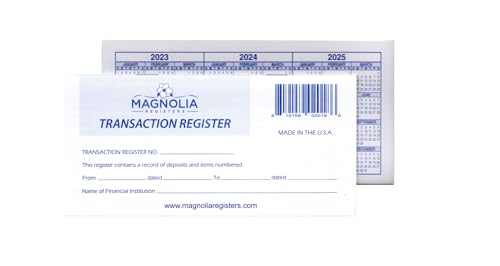
This set of ten checkbook registers pairs 23-24-25 calendar grids with standard transaction lines. Made in the USA, the registers feature high-contrast blue and white lines that aid readability and reduce eye strain during lengthy entry sessions. They are suitable for households or small offices that prefer a consistent, printed calendar reference within the same binding system as their checks, ensuring smooth monthly planning and tracking.
Buying Guide: Key Purchase Considerations
- Format and size: Choose a layout that matches your desk space and handwriting comfort. Large-format desk registers are ideal for frequent entries, while compact models fit portable or filing systems.
- Line spacing and readability: Wider lines and high-contrast printing reduce mistakes, particularly for users with low-vision needs.
- Calendars and reference data: Back calendars or integrated tax tickers assist with budgeting and tax prep, but add bulk. Decide if a calendar grid adds value to your workflow.
- Durability and binding: For long-term use, select a sturdy binding and quality paper that resists bleed-through. Made-in-the-USA options may appeal to buyers prioritizing domestic production.
- Intended use: Personal finance, small business bookkeeping, or savings tracking each have distinct ledger needs. Some registers emphasize debt tracking, others focus on deposits and withdrawals or deductions.
- Expansion potential: If you manage multiple accounts or clients, consider sets or multi-register bundles to maintain consistency across ledgers.
- Accessibility: If you require larger print or simplified layouts, look for “Easy Read” or larger-line options to reduce strain and errors.
- Cost vs. value: Compare page counts, entry capacity, and calendar features to determine overall value, not just the upfront price.
Across these options, readers should assess whether the goal is to keep a single, streamlined ledger or to maintain separate registers for different accounts or purposes. The chosen products provide a spectrum—from compact, all-in-one formats to large, desk-oriented ledgers—so users can align the tool with real-world workflow and filing habits.